
How to Choose the Right SEO Keywords for Your Website
Published: Updated:

Learn how to choose SEO keywords for a business website, evaluate search intent, build keyword clusters, map keywords to pages and prioritise terms with real commercial value. Here I'm also showing the real SEO examples how Katra Marketing ranks in Google with service- and local SEO keyword research in the Middle Eastern markets, such as Dubai, Abu Dhabi, Riyadh, Jeddah, Amman, Doha, Kuwait, Muscat and Manama.
Choosing the right SEO keywords is not about creating a long list of phrases and repeating them across a website. It is about identifying what potential customers search for, why they search and which service page, product page or article should answer each query. A website can rank for hundreds of keywords without generating useful enquiries. Effective SEO keyword research connects search demand with products, services, target customers, locations and business priorities, helping companies attract more relevant traffic from the markets they actually serve.
The right SEO keyword is a relevant search that the company can answer better than competing pages.
What Are SEO Keywords and Why Do They Matter?
SEO keywords are the words and phrases people use to find information, products, services or solutions through Google and other search platforms. Some keywords are broad, such as "marketing agency", "website development" or "SEO services". Others are more specific, such as "B2B marketing consultant in Saudi Arabia", "website development in UAE" or "SEO services in Jordan". The image below shows examples of keyword visibility for Katra Marketing.
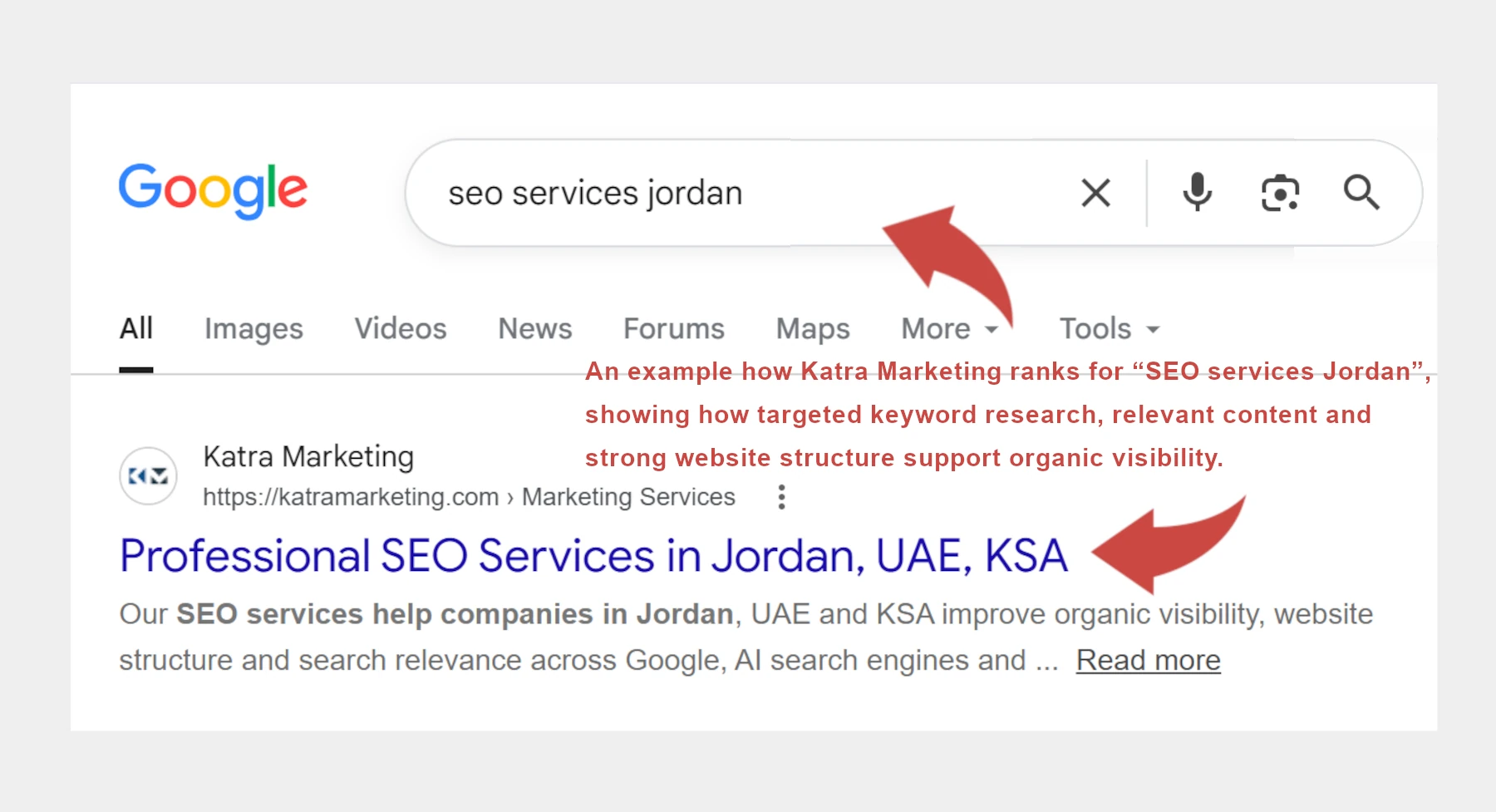
Specific phrases often have lower search volume but stronger commercial relevance. Keywords should therefore be assessed by search intent, relevance, competition, commercial value and the company’s ability to provide a credible answer.
Do Meta Keywords Matter for SEO?
Older SEO advice recommended placing target phrases inside a meta keywords tag. Google confirmed in 2009 that it does not use this tag for web rankings.
This code is unnecessary:
<meta name="keywords" content="seo company, marketing agency, website development">
Keywords still influence page topics, headings, content, internal links and website structure. They should not be hidden in an obsolete tag or repeated unnaturally. Google’s SEO Starter Guide explains the foundations of modern search optimisation.
Start SEO Keyword Research With Business Priorities
Keyword research should begin with the business rather than a keyword tool. Identify the priority products, services, customer segments, countries, industries and offers the company wants to promote. Clarify which enquiries are valuable to sales and which subjects the company can cover with genuine expertise. Otherwise, the research may produce a large keyword spreadsheet with no clear connection to commercial goals or website pages.
Build a Seed Keyword List Around Products and Services
Begin with language already used on the website, in sales presentations, proposals, CRM records and customer enquiries. A basic keyword list should cover products, services, customer problems, industries, locations, buyer roles, use cases, technical terms, prices and common objections. For a luxury jewellery brand case study such as Damas in UAE, the keyword pool include jewellery types, materials, occasions, prices, services and local buying searches, as you can see on the slide.

Customers may not use formal product or collection names. They may search for "diamond ring in Dubai", "gold jewellery gift", “wedding jewellery set" or "jewellery under 5,000 AED". Both company terminology and customer language should be investigated.
Match SEO Keywords to Search Intent
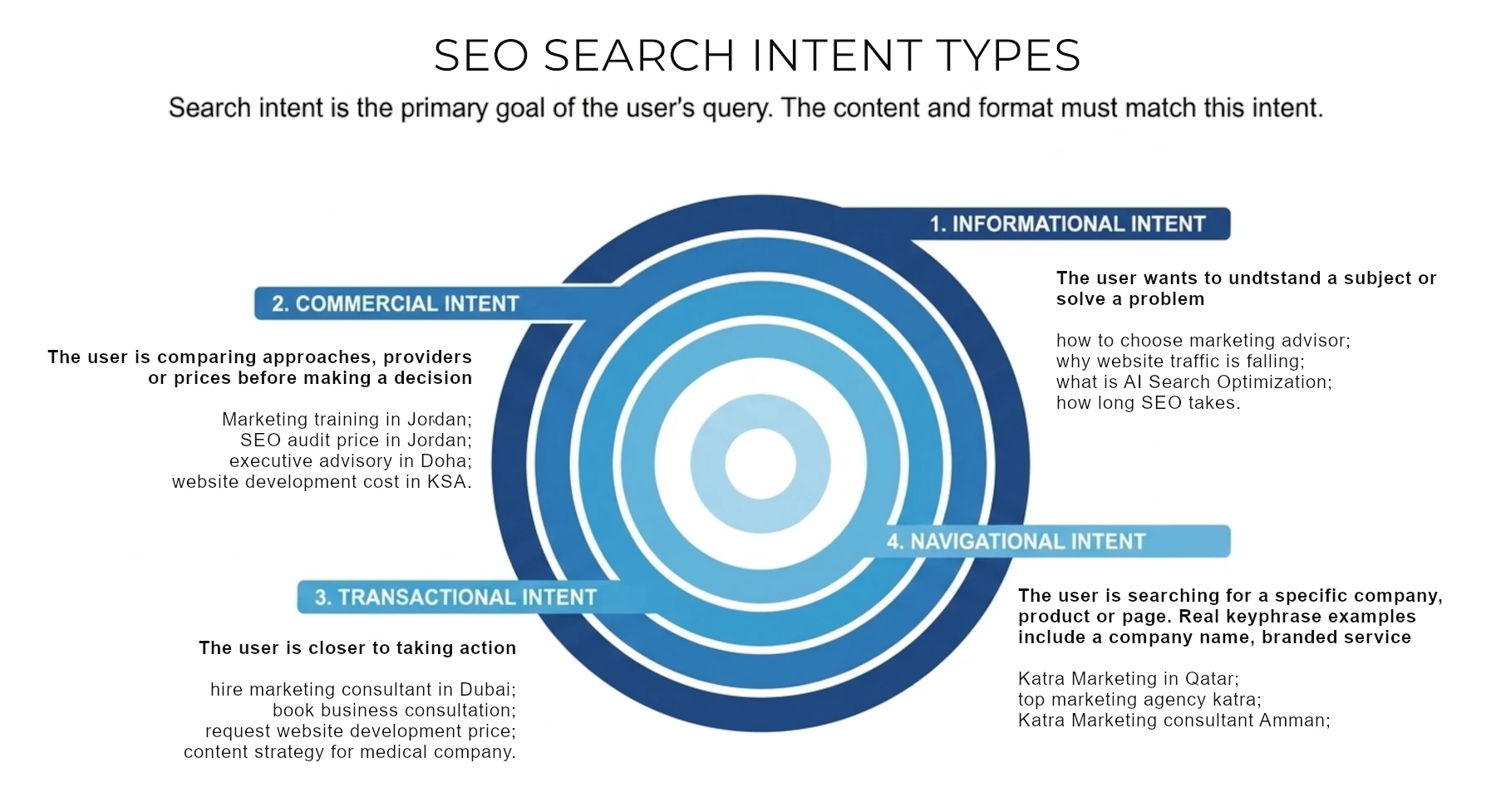
Search intent is the reason behind a query. Similar keywords may require different pages depending on whether the user wants information, comparison, a specific company or an immediate purchase.
Informational Search Intent
The user wants to understand a topic or solve a problem. Queries such as "how to choose a marketing advisor", "why website traffic is falling" and "how long SEO takes" usually go well for the articles, guides and FAQs.
Commercial Search Intent
The user is comparing providers, services or prices. Searches such as "SEO audit price in Doha", "marketing training in Kuwait" and "website development cost in KSA" may need detailed service pages, comparisons, pricing guidance or case studies.
Transactional Search Intent
The user is ready to take action. Searches such as "hire marketing consultant in Dubai", "book business consultation" or "request website development price" should lead to a clear commercial page with proof, scope and a visible next step.
Navigational Search Intent
The user is looking for a particular company, service or page. Examples include "Katra Marketing in Qatar", "Katra Marketing consultant Amman" or "Katra Marketing LinkedIn". The page format must match the intent. An article may not satisfy someone requesting a quotation, while a short service page may not answer a detailed research question.
Use SEO Keyword Tools Carefully
Keyword tools help identify related phrases, estimated demand and possible competition. One accessible option is Google Keyword Planner.
Use its data as guidance rather than an exact forecast. Search volumes are estimates and paid advertising competition does not measure organic SEO difficulty. Low-volume phrases may still be commercially important in smaller markets such as Jordan, Bahrain, Oman, Qatar or Kuwait. In B2B SEO, one relevant enquiry can be more valuable than thousands of unsuitable visits.
Analyse Google Search Results and Competitors
Do not inspect competitors’ obsolete meta keywords tags. Search for the target phrase and review the pages that currently rank. Check whether Google displays service pages, articles, product pages or directories. Review how thoroughly the ranking pages answer the query, which markets they cover and what useful information is missing.
The search results show how Google interprets the keyword and what type of page may be needed to compete.
Choose Keywords for Your Ideal Customer Profile
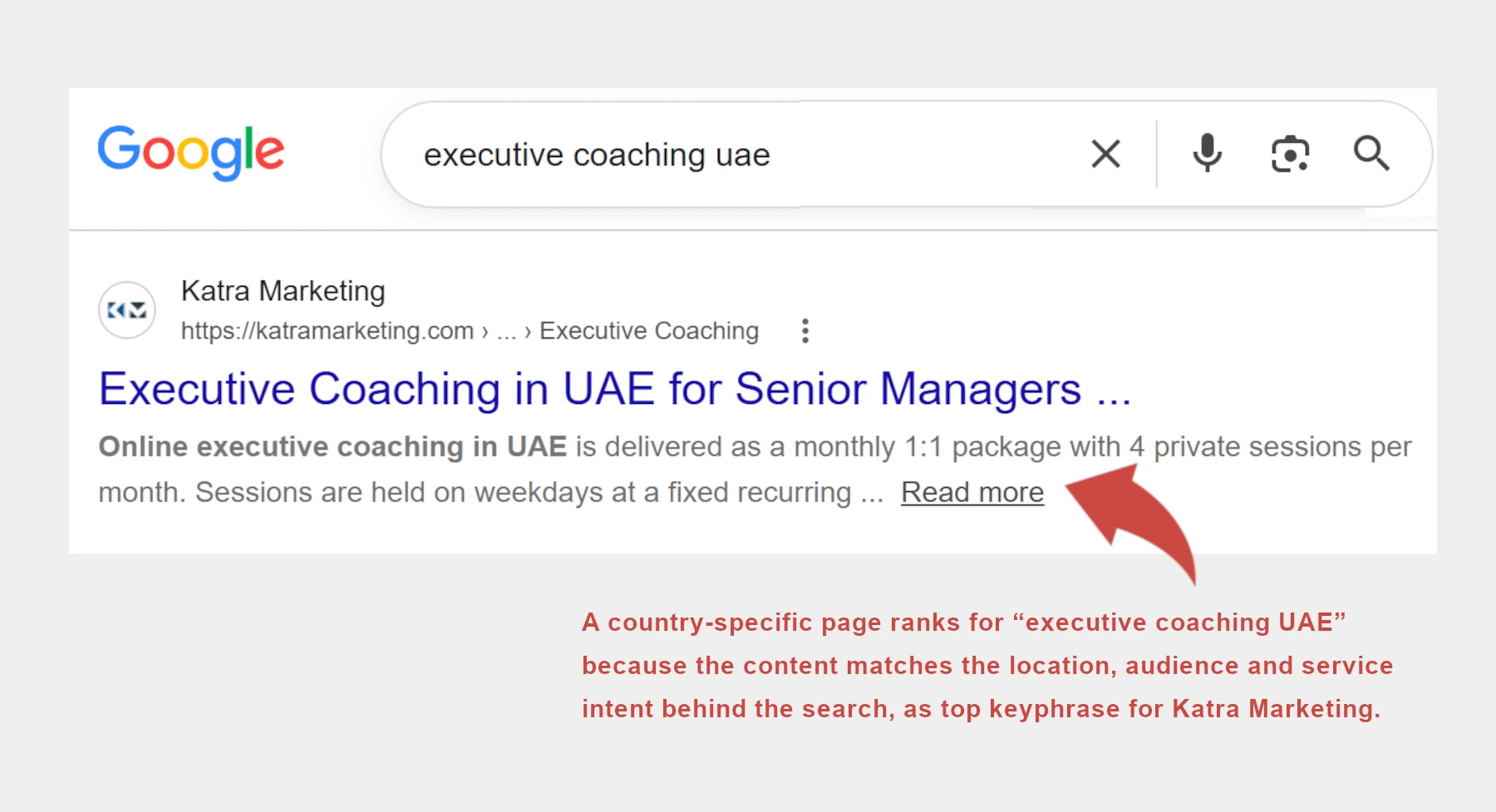
Broad keywords attract broad audiences. B2B companies often need a narrower keyword strategy based on the buyer’s industry, company size, location, role, problem and required service complexity. For example, "marketing advisory" is broad, while "product marketing audit for B2B company" describes a more specific project. The image below shows how "marketing consulting KSA" query in Google can create visibility in Saudi Arabia even when Katra Marketing page targets several markets.

Niche keywords can reach buyers who closely match the company’s ideal customer profile. However, separate pages should only be created when the buyer need or search intent is meaningfully different.
Build Topical Authority With Related SEO Content
Topical authority comes from a connected group of useful pages around a service, product or customer problem. A SEO topic cluster may include keyword research, technical SEO, website structure, content planning, internal linking, local SEO, Arabic SEO, AI search visibility and website migration. Each page should answer a distinct question while supporting the wider subject. This is why content marketing and SEO should be planned together.
The article 6 Ways to Improve Content Marketing supports the broader content cluster, while AI Search Optimization for Middle East companies and AISO for enterprise companies extend the subject beyond traditional Google rankings.
Create SEO Keyword Clusters for Core Services
Keyword cluster groups are closely related searches that can be covered by one comprehensive page or a connected set of pages. A marketing consulting keyword cluster may include:
- marketing consultant;
- marketing consulting services;
- marketing strategy consultant;
- marketing advisory services;
- marketing audit services;
- go-to-market strategy consulting;
- fractional CMO services;
- brand positioning consultant;
- marketing consultant in UAE, Saudi Arabia or Qatar.
The goal is not to create one page for every keyword variation. Group searches that share the same intent and create separate pages only when users require a different answer.
Map SEO Keywords to Website Pages
Assign each important keyword group to a specific page. A keyword map should record the URL, main topic, search intent, supporting terms, target audience, market and required action. This prevents several pages from competing for the same keyword and reveals missing service or content pages. Keyword mapping should influence the sitemap before website design and development begin.
Use SEO Keywords Naturally On-Page
A primary keyword may appear in the page title, H1, selected subheadings, introduction, URL, meta description, image alt text, internal links and body content. It does not need to appear in every paragraph. Search engines understand context and related terminology. Keyword stuffing weakens readability and makes the page less useful.
Use search language clearly, but write for the person who needs the answer.
Use Internal Links to Strengthen Topic Structure
Internal links connect related pages, help visitors continue their research and show search engines how informational and commercial content fits together. The anchor text should describe the linked page. "Read more" provides less context than SEO services for English and Arabic websites. Internal links should be planned within the content structure rather than added randomly.
Update Existing Content for Faster SEO Gains
Improving an existing article may produce faster results than publishing a new one. Older pages may already have backlinks, search history and partial rankings.
Useful updates include improving headings, rewriting introductions, adding recent evidence, answering missing questions, replacing outdated information, strengthening internal links and removing repetitive sections. Changing the date alone does not make an article more relevant. The content itself must be meaningfully improved.
What Is Still Working in SEO in 2026?
SEO continues to reward pages that provide a stronger and more relevant result than competing options. Effective factors include useful content, clear search intent, topical depth, internal linking, technical performance, original expertise and regular content review. The best result is not always the longest page. It is the one that provides the clearest, most credible and most complete answer for the search.
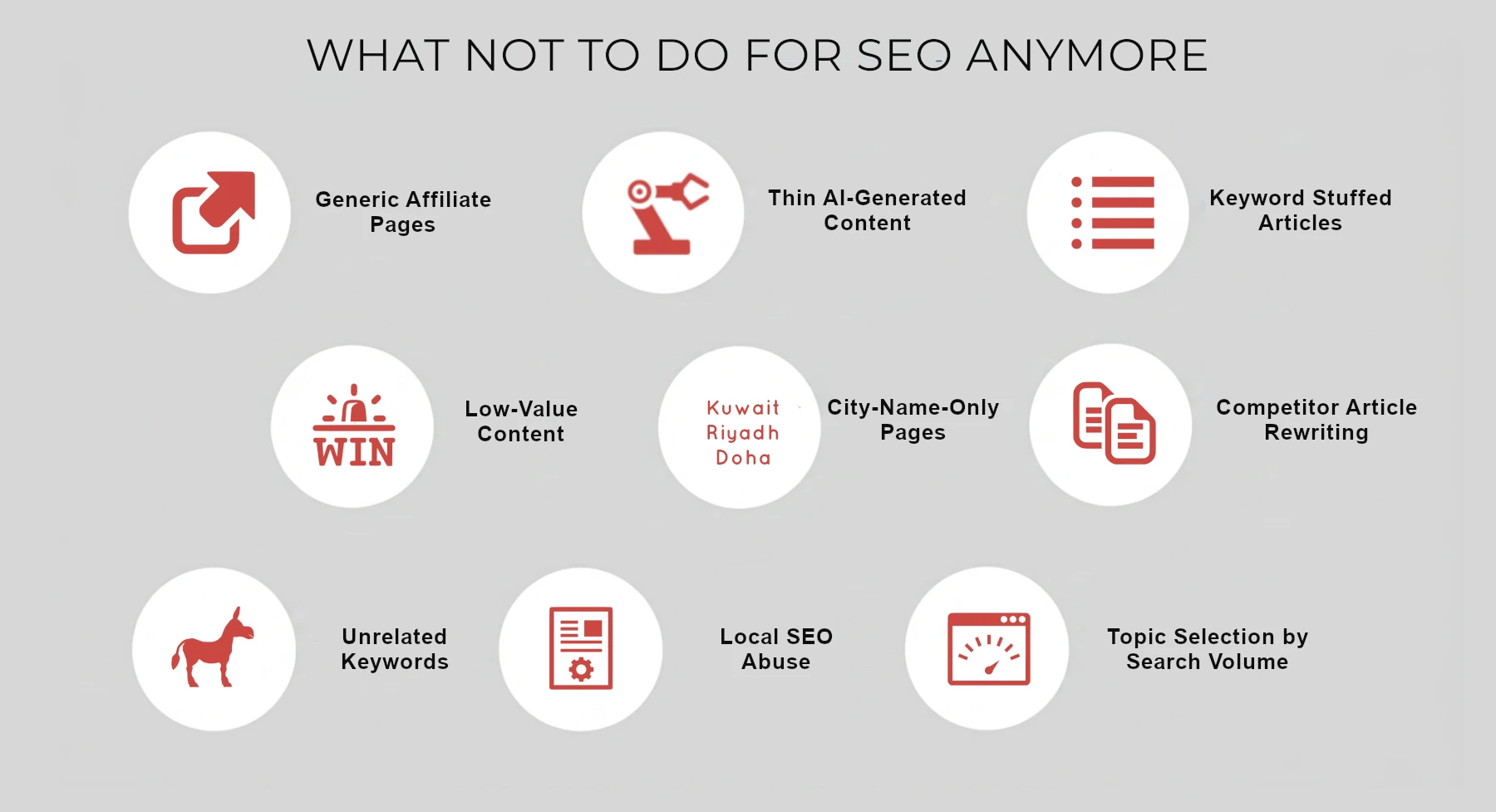
Which SEO Tactics No Longer Work?
SEO becomes weaker when companies publish thin AI-generated content at scale, repeat keywords unnaturally, copy competitors, create near-identical location pages or target topics unrelated to their offer.
AI can support research, structure and editing, but it does not replace judgement, expertise or original input. Publishing 20 weak pages does not create topical authority. It creates more content that may later need to be corrected, consolidated or removed. Review how we approach AI Search Optimization and why articles should not be produced entirely by AI.
SEO Success Requires Consistency, Not Hacks
Modern SEO depends less on isolated tactics and more on consistently providing the best result. It requires clear business priorities, correct search intent, useful content, strong internal links, technically accessible pages and accurate measurement.
No keyword, plugin or content template can compensate for a weak offer, confusing website or page that fails to answer the search. This is why our SEO work begins with the business, priority services, target markets, website structure and existing content rather than a disconnected keyword list.
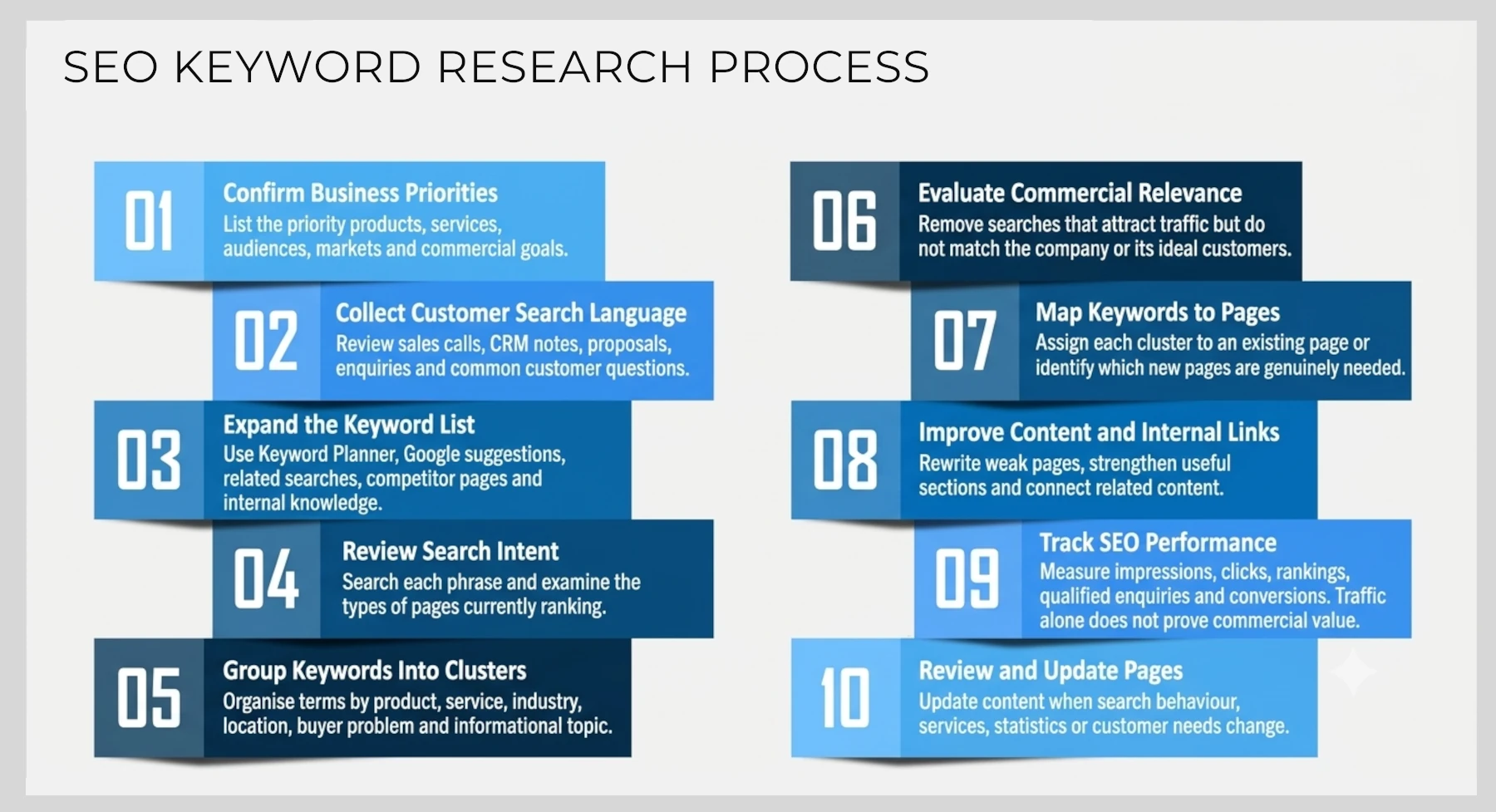
A Practical SEO Keyword Research Process
Begin by defining the priority products, services, audiences and markets, then collect the language customers use in enquiries, sales calls and CRM records. Expand the list with keyword tools and search results, assess the intent and commercial relevance of each phrase, group related terms into clusters and assign them to suitable website pages. Improve the content and internal links, track rankings, enquiries and conversions, then review and update the pages as search behaviour and business priorities change.
Choose SEO Topics Your Company Can Own
A useful SEO strategy does not pursue every keyword in the market. It selects topics connected to the company’s expertise, target customers and commercial priorities.
The final keyword plan should combine core service terms, high-intent searches, industry questions, country and language queries, niche opportunities and educational content that supports buyer decisions.
The goal is not simply to place keywords on pages. It is to build a website that understands buyer needs, answers relevant questions and gives search engines enough context to recognise the company’s expertise.
If your company needs a structured keyword plan, content review or SEO audit, check our SEO services for Middle East companies. The work will include keyword research, technical review, content planning, internal linking, English and Arabic SEO and recommendations for existing or new websites.
About the Author

About Katra Marketing

